Everyday AI
The Real AI Advantage Is Human Judgment
As AI tools spread, businesses gain an edge from human judgment, communication, critical thinking, and practical AI skills.
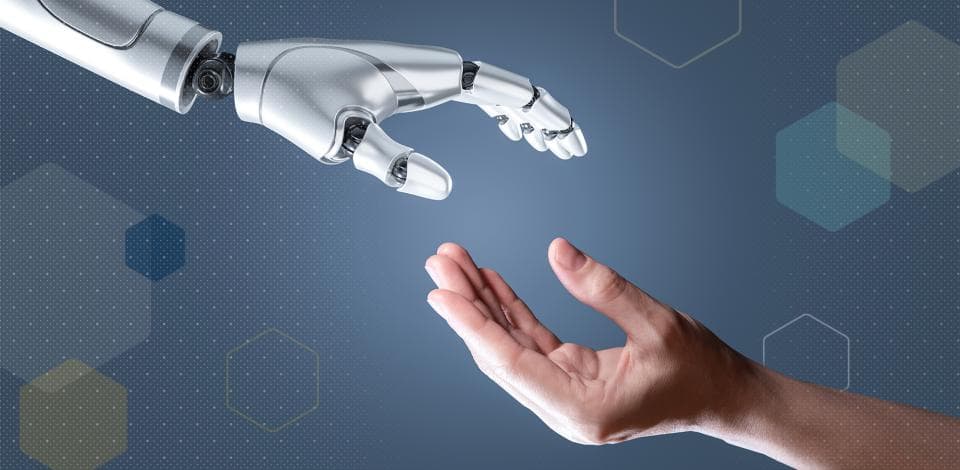
The common fear is that AI wins by replacing people.
That fear is understandable, but it is not the whole pattern. In many real workplaces, the stronger pattern is that AI raises the value of people who can interpret, communicate, decide, and adapt.
AI can draft. It can summarize. It can compare options. It can turn a messy starting point into something easier to review.
But it does not automatically know what matters in your business. It does not understand every customer relationship. It does not feel the risk of a bad decision. It does not know when a technically correct answer would still be wrong for the moment.
That is where human judgment becomes the multiplier.
Businesses do not gain a durable edge from AI tools alone. They gain it when AI is paired with domain knowledge, sound judgment, and real-world decision-making.
Why this matters now
AI tools are getting cheaper, easier to access, and more common.
That changes the competitive question.
When only a few people had access to advanced AI tools, the tool itself felt like the advantage. But as access spreads, the tool becomes less differentiating. A competitor can use the same chatbot, the same writing assistant, the same image generator, and the same meeting summarizer.
The real difference becomes how well people use those tools.
Do they ask better questions? Do they provide better context? Do they check the output? Do they know when the answer sounds plausible but misses the point? Do they understand the customer, the process, the team, and the tradeoffs well enough to apply AI responsibly?
Those are human capabilities. They are also business capabilities.
Human judgment is the multiplier
AI can be useful, but it is not equally useful in every situation. It performs best when people guide it well and review it carefully.
That makes several human skills more important, not less.
First, people still have to prioritize what matters. AI can generate a long list of possible actions, but someone has to decide which two or three deserve attention. In a business, that choice depends on customer impact, timing, cost, risk, and the reality of the team doing the work.
Second, people still have to spot context and exceptions. A process may work one way for most customers and differently for a key account. A policy may be clear on paper but flexible in practice. A report may show the numbers but miss the story behind them.
Third, people still have to communicate. Customers do not only want fast answers. They want clear, trustworthy answers. Teams do not only need information. They need alignment. AI can help prepare the message, but a person still has to decide what tone, timing, and level of detail fits the situation.
Fourth, people still have to make tradeoffs under uncertainty. Many business decisions are not clean yes-or-no questions. They involve incomplete information, competing priorities, and consequences that are hard to measure in advance. AI can support the thinking, but it should not replace the responsibility.
Finally, people have to know when not to trust the first output. This may be the most important beginner AI skill. AI can sound confident even when it is incomplete, generic, outdated, or wrong. Strong users treat the first output as a draft, not a decision.
The business competitiveness angle
The companies that stay competitive will not simply be the ones that say they adopted AI.
They will be the ones that build teams capable of using AI while preserving accuracy, trust, and good judgment.
That means AI adoption should not be treated as a software rollout alone. It is also a training challenge, a workflow challenge, and a leadership challenge. For businesses, an AIQ Opportunity Report can help identify where AI workflow automation may create practical value first.
A team that uses AI poorly can create mistakes faster. A team that uses AI well can reduce friction, improve clarity, and spend more energy on the work that actually requires people.
For example, AI can help a team draft a customer response, but a person still needs to check whether the answer is accurate, whether it fits the relationship, and whether it solves the real problem. AI can summarize a meeting, but someone still needs to decide which follow-up matters most. AI can outline a plan, but a leader still needs to judge whether the plan fits the business.
That is why durable advantage comes from pairing the tool with people who understand the work.
What students and workers are seeing
This is not only a business issue. It is also an education and career issue.
An Associated Press report from May 15, 2026 described students reconsidering majors as they try to understand which fields may be more resilient in an AI-heavy economy. The article captures a real anxiety: people are trying to predict which skills will hold up when AI keeps improving.
One useful takeaway from that reporting is not that anyone can perfectly identify an AI-proof path. It is that communication, critical thinking, and the fundamentals of a broad education may matter more as technology changes quickly.
That lines up with what businesses are starting to feel. If basic tool access becomes common, then the valuable person is not simply the one who has opened the newest AI app. It is the person who can use AI to think more clearly, communicate better, check assumptions, and apply judgment in a real situation.
The Financial Times has also framed this as an education gap. In a June 3, 2026 Working It article titled "Employers step in to fill the AI education gap," FT workplace columnist Isabel Berwick describes a widening gap between what employers need and what schools and universities can prepare for quickly. The business implication is clear: employers cannot assume formal education alone will prepare people for AI-shaped work.
The learning angle
The best preparation is not only technical AI familiarity.
People should learn how to use AI tools, but they should also keep strengthening the skills that make those tools useful.
That includes writing clearly. If you cannot explain what you want, AI will often give you a vague result. Better writing leads to better prompts, better instructions, better edits, and better final work.
It includes critical thinking. AI output should be questioned. What is missing? What assumption is the answer making? What facts need to be checked? What would a customer, manager, or colleague misunderstand?
It includes communication. Many AI-assisted workflows still end with a human message: an email, a presentation, a recommendation, a meeting, a customer response, or a decision memo.
It includes decision-making. AI can expand the options, but people still need to choose.
For beginners, this is good news. You do not have to become an AI engineer to become more capable with AI. You can begin with a beginner AI course that teaches practical use in normal work while improving the human skills that make the output useful.
The practical takeaway
AI will keep improving. Tools will keep changing. New features will arrive faster than most people can track.
But the goal is not to chase every tool.
The goal is to build better human use of the tools.
For a business, that means helping people use AI in real workflows, with clear standards, review habits, and judgment. For an individual, it means practicing with AI while strengthening the skills that still matter most: writing, thinking, communicating, prioritizing, and deciding.
In an AI-heavy market, the winners are not the companies with the most tools.
They are the ones with the best human use of those tools.
Sources
Want to build practical AI judgment?
Everyday AI Live helps beginners use AI clearly, carefully, and confidently through practical classes and guided practice.
Explore Everyday AI Live